News
-

- How to Customize ESD Workwear for Your Factory
- In industries such as electronics manufacturing, semiconductor production, and cleanroom operations, ESD workwear is essential for protecting sensitive components from electrostatic discharge (ESD). However, generic ESD clothing may not always meet the specific needs of your factory. This is where c
-

- OEM & ODM ESD Garments: What Buyers Should Know
- In industries such as electronics manufacturing, semiconductor production, and cleanroom assembly, electrostatic discharge (ESD) protection is essential. Many global distributors and industrial buyers prefer sourcing OEM ESD garments instead of generic products in order to build their own brand, ens
-
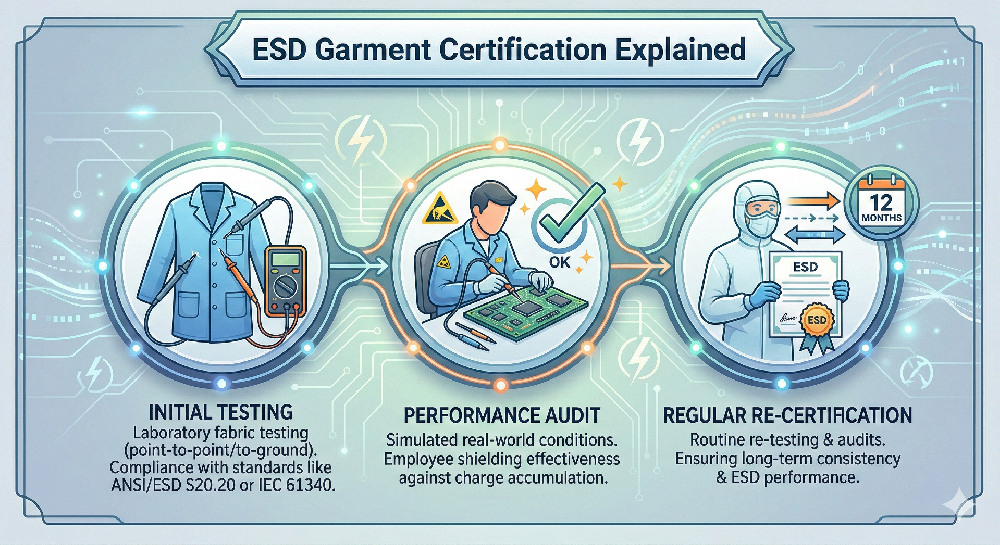
- ESD Garment Certification Explained
- In industries where electrostatic discharge (ESD) poses a significant risk, such as electronics manufacturing, semiconductor production, and cleanroom environments, the importance of wearing certified ESD garments cannot be overstated. ESD certification ensures that garments meet strict standards fo
-
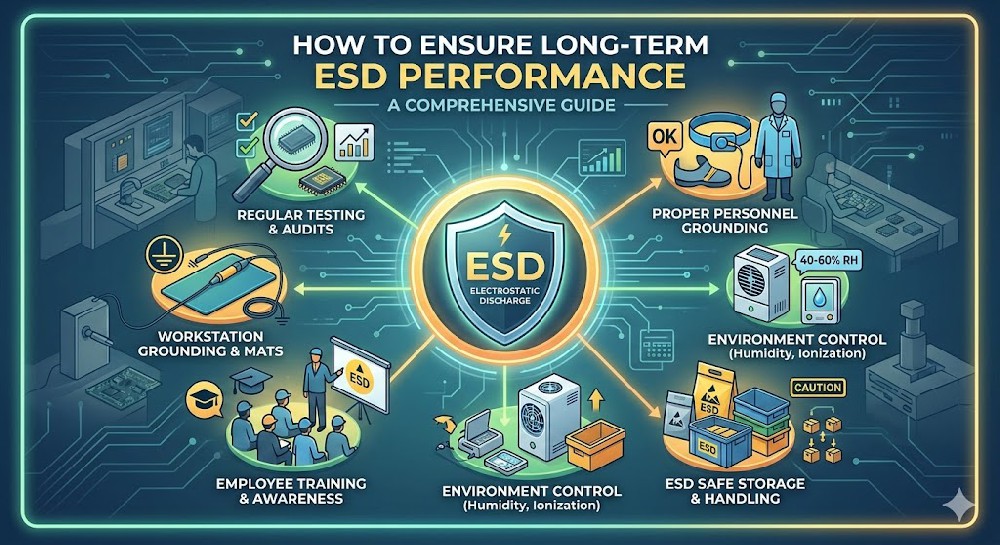
- How to Ensure Long-Term ESD Performance
- Ensuring the long-term ESD performance of garments is critical for businesses that rely on ESD clothing to protect sensitive electronics and equipment. Over time, ESD garments can lose their protective properties due to wear, washing, and environmental factors. To maintain effective ESD protection,
-
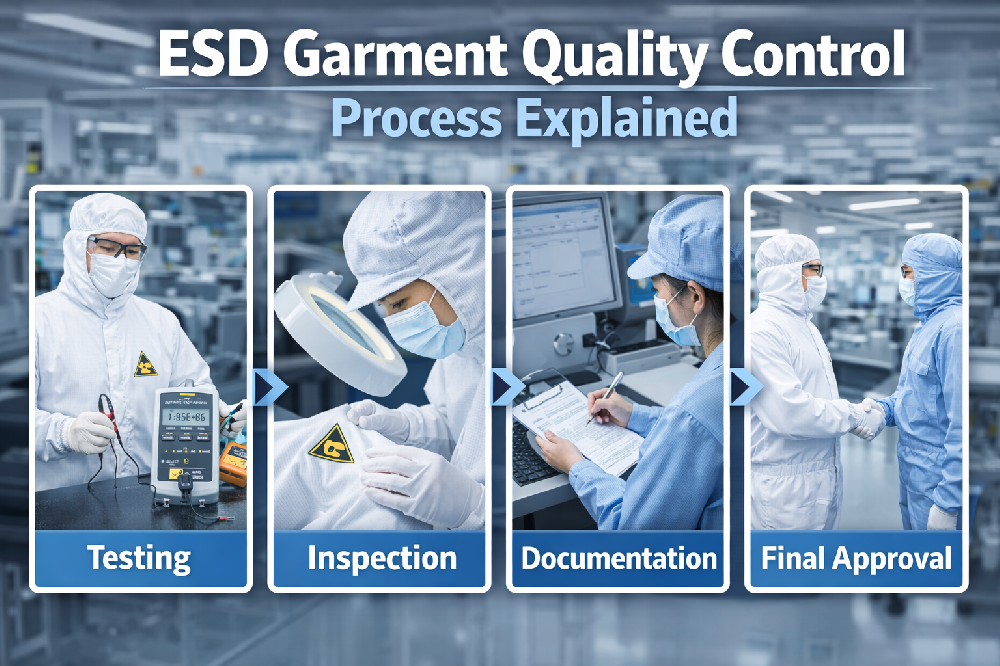
- ESD Garment Quality Control Process Explained
- In industries where electrostatic discharge (ESD) poses a significant risk to sensitive electronic components, the effectiveness of ESD garments plays a critical role in preventing costly damage. Ensuring the quality and reliability of these garments is paramount, which is where a robust ESD garment
-
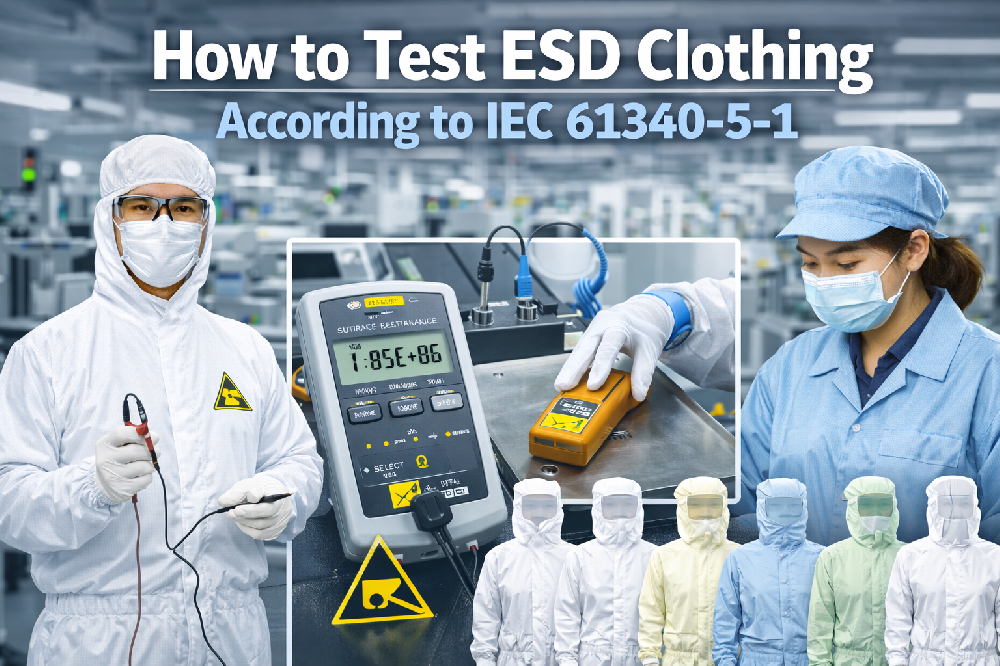
- How to Test ESD Clothing According to IEC 61340-5-1
- Electrostatic discharge (ESD) is one of the leading causes of damage to sensitive electronic components, and ensuring the effectiveness of ESD clothing is crucial for any industry dealing with sensitive devices. However, it’s not just about buying the right gear—it’s also about verifying that it
-

- Cleanroom Garments for ISO Class 5–8 Environments
- In industries where cleanliness and precision are paramount, such as pharmaceuticals, biotechnology, electronics manufacturing, and semiconductor production, cleanroom garments are an essential part of maintaining controlled environments. Particularly in ISO Class 5–8 environments, where the tolera
-
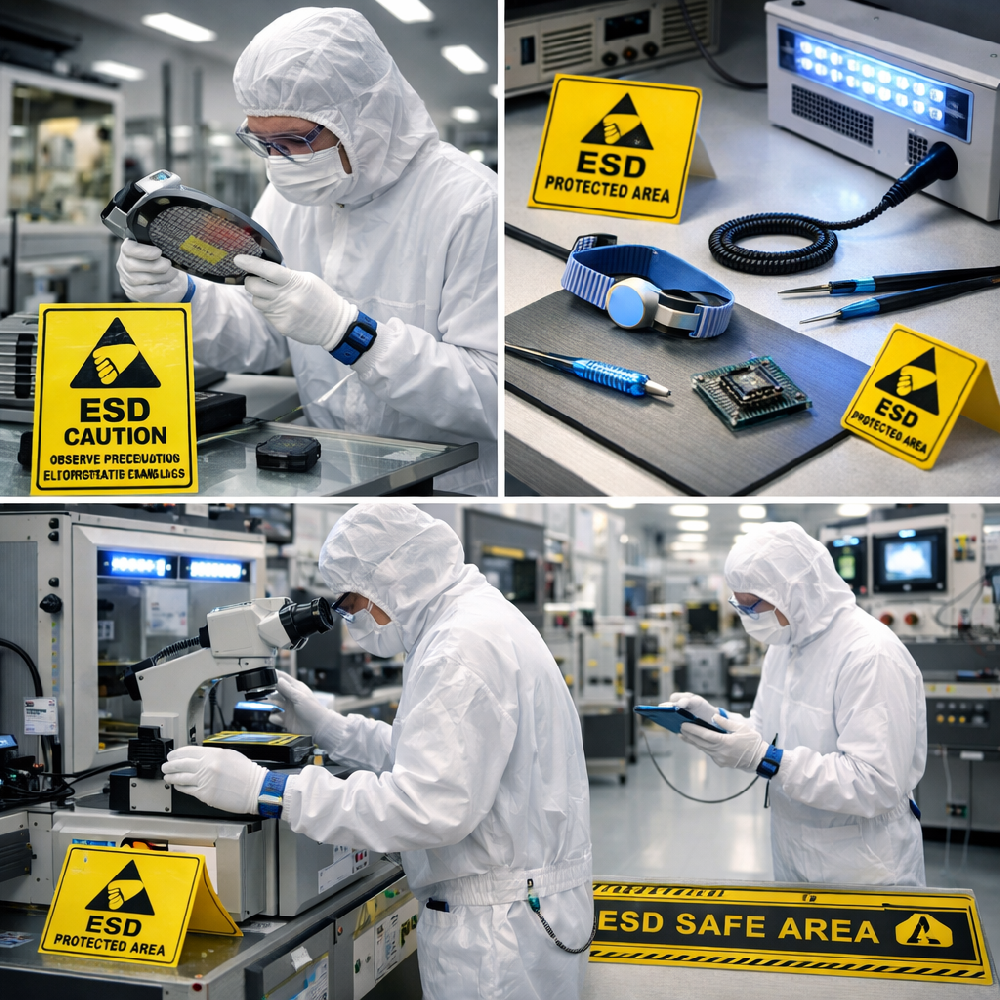
- ESD Protection in Semiconductor Cleanrooms
- Semiconductor cleanrooms are the heart of the semiconductor manufacturing process. They are controlled environments where even the smallest particle or electrostatic discharge (ESD) can cause irreparable damage to sensitive devices like integrated circuits (ICs) and microchips. As the semiconductor
-
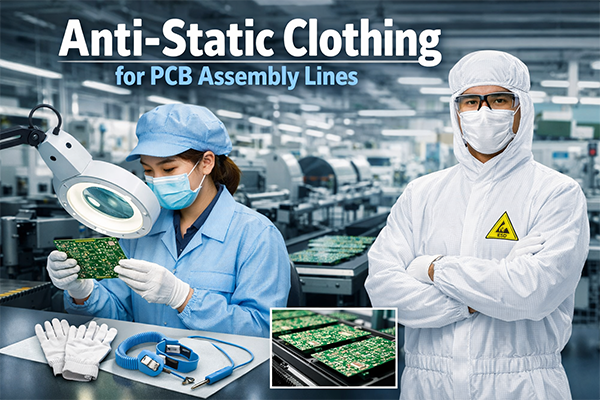
- Anti-Static Clothing for PCB Assembly Lines
- In PCB assembly lines, electrostatic discharge (ESD) is one of the most common causes of invisible product defects. Even a small static spark that cannot be felt by the human body can damage sensitive components, reduce board reliability, and create latent failures. That is why anti-static clothing
-
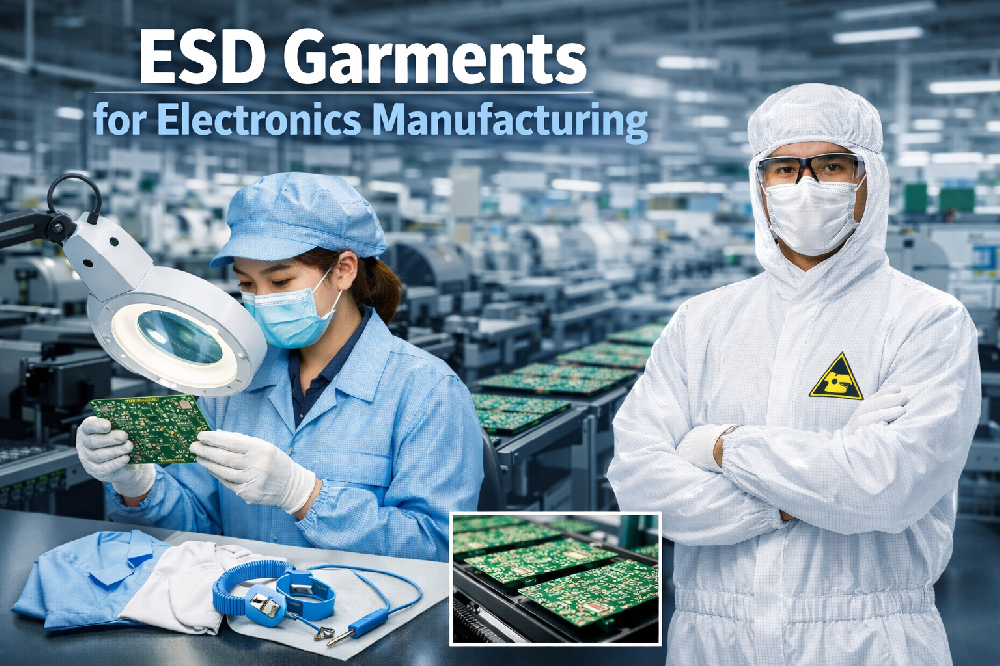
- ESD Garments for Electronics Manufacturing
- In modern electronics manufacturing, electrostatic discharge (ESD) is one of the most critical invisible risks. A single uncontrolled static event can damage microchips, degrade circuit reliability, and cause costly product failures. That is why ESD garments for electronics manufacturing are a funda
-

- How Washing Affects ESD Garment Performance
- The Hidden Impact of ESD Washing on Resistance Stability and ComplianceIn ESD-controlled environments such as semiconductor fabrication, electronics assembly, and cleanrooms, garments are washed frequently to maintain cleanliness and particle control.However, ESD washing is not only a hygiene proces
-
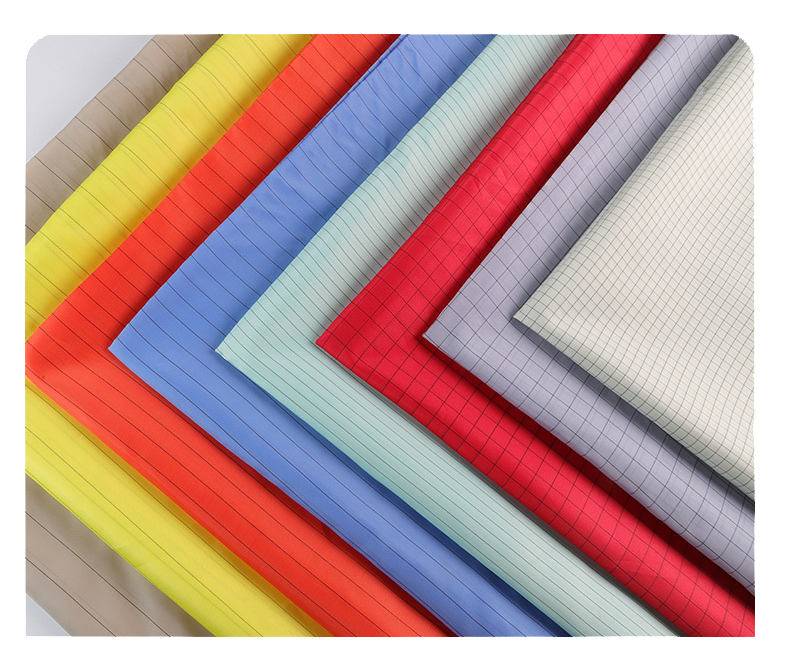
- Surface Resistance vs Volume Resistance in ESD Fabrics
- Understanding the Meaning of ESD Resistance in Professional Antistatic TextilesIn electronics manufacturing, cleanrooms, and static-sensitive environments, ESD resistance is one of the most critical parameters used to evaluate the performance of antistatic fabrics.However, many buyers and even engin
-
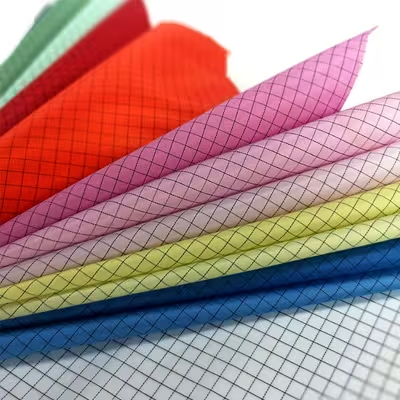
- Carbon Fiber vs Conductive Yarn in ESD Clothing
- Understanding the Material Science Behind Reliable ESD ProtectionIn industries such as semiconductor manufacturing, electronics assembly, cleanrooms, and precision engineering, electrostatic discharge (ESD) is not a minor concern—it is a critical risk factor.The effectiveness of ESD clothing depend
-
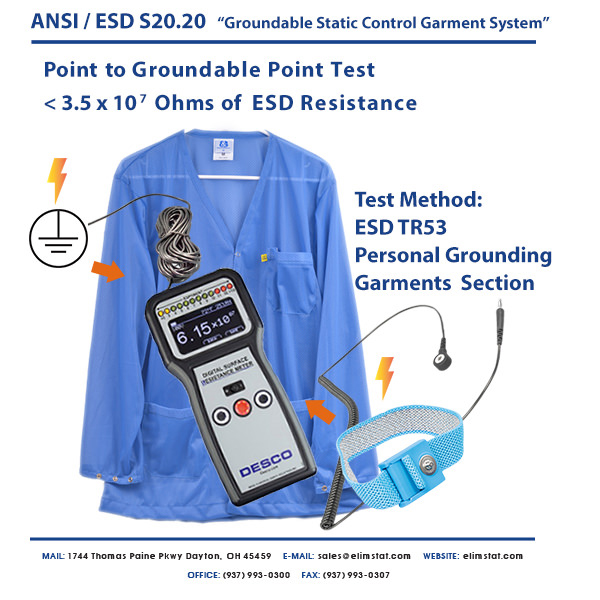
- How Do ESD Garments Work?
- Electrostatic discharge (ESD) is a hidden but serious threat in industries such as electronics manufacturing, semiconductor fabrication, cleanrooms, and precision assembly. To control static electricity at its source, ESD garments play a critical role in any effective ESD protection system.But how E
-
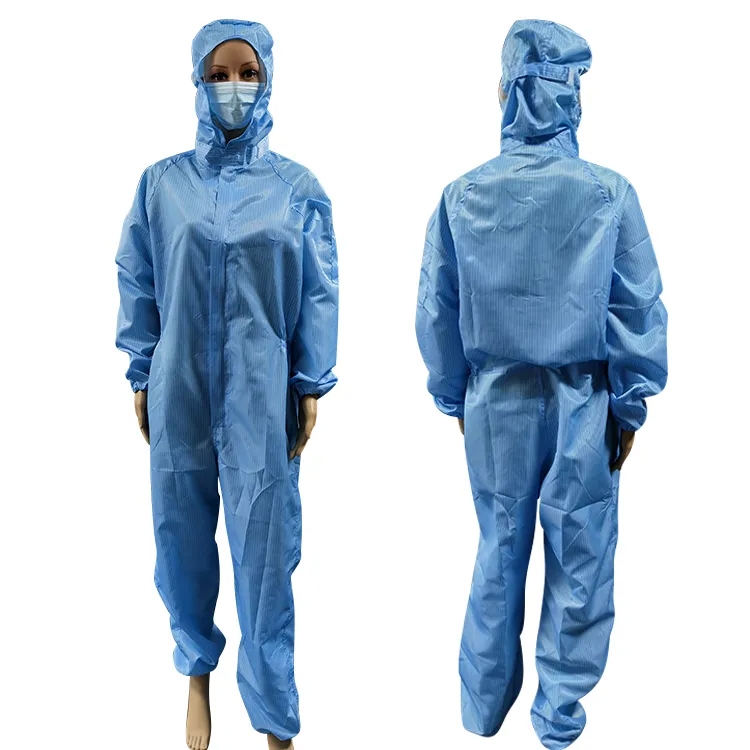
- What Is ESD Workwear and Why the Manufacturer Matters in Industrial Static Control
- In industries where electronic components, precision instruments, and sensitive devices are handled every day, electrostatic discharge (ESD) is not a minor issue—it is a critical risk. One uncontrolled static discharge can damage components, reduce product yield, or even cause complete system failu
-
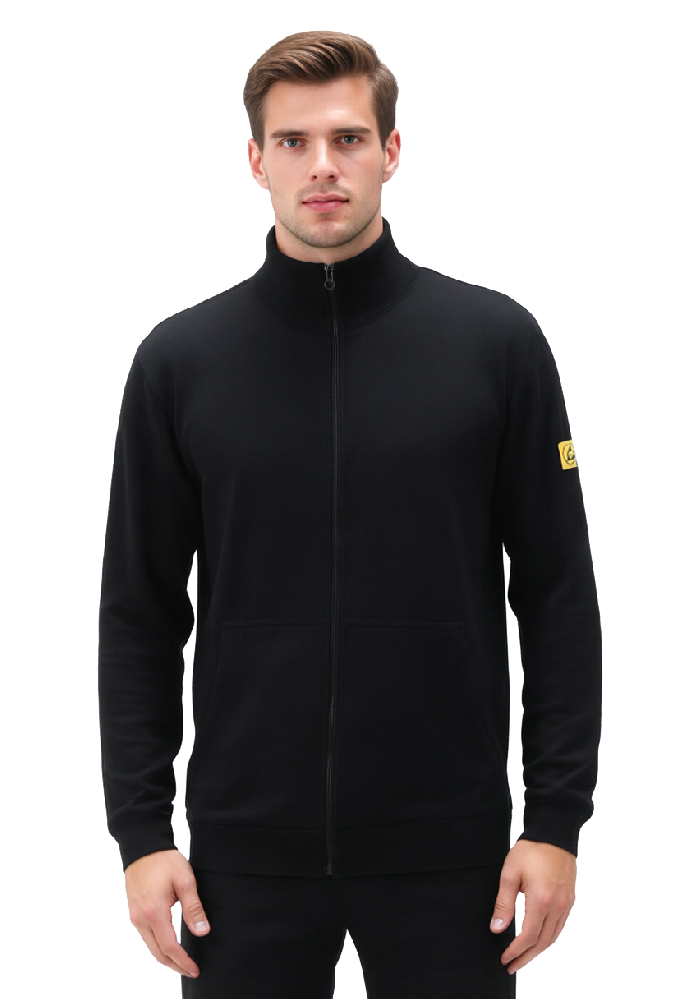
- ESD Workwear and Its Crucial Role in Electronics Manufacturing
- Introduction: The Impact of Electrostatic Discharge (ESD) on Electronic DevicesIn the world of electronics manufacturing, one of the most overlooked threats is electrostatic discharge (ESD). It occurs when static electricity unexpectedly discharges, potentially causing severe damage to sensitive ele
-

- Common Mistakes When Buying Anti-Static Workwear
- IntroductionBuying anti-static workwear without proper technical evaluation can lead to ESD failures, audit issues, and hidden costs.Below are the most common mistakes buyers make—and how to avoid them.Mistake 1: Confusing “Anti-Static” with “ESD Compliant”Many garments labeled “anti-static”:
-
- What Fabric Is Best for ESD Workwear?
- IntroductionFabric choice determines ESD performance, durability, and comfort. Selecting the right ESD fabric is critical for maintaining consistent protection.This article explains the most common ESD fabrics and how to choose the best option.1. Polyester Filament Base FabricMost ESD garments use:C

 siu24@trustat-techwear.com
 +86 1866 2439 831