
 siu24@trustat-techwear.com
 +86 1866 2439 831

Electrostatic discharge (ESD) is a hidden but serious threat in industries such as electronics manufacturing, semiconductor fabrication, cleanrooms, and precision assembly. To control static electricity at its source, ESD garments play a critical role in any effective ESD protection system.
But how ESD garments work is a question many buyers, engineers, and safety managers still ask. This article explains the working principles, materials, and real-world performance of ESD garments—helping you make informed decisions based on science, not assumptions.
What Is Electrostatic Discharge (ESD)?
Electrostatic discharge occurs when static electricity accumulated on a surface or human body is suddenly released. Even a discharge far below the level a person can feel can permanently damage sensitive electronic components.
In ESD-protected areas (EPAs), people are one of the largest sources of static electricity. Ordinary clothing made from synthetic fibers can generate thousands of volts through friction. That’s why ESD garments are essential—they control static at the human level before it becomes a risk.
How ESD Garments Work: The Core Principle
At a fundamental level, how ESD garments work can be explained in three coordinated functions:
Static generation control
Charge dissipation
Electrical grounding or equalization
ESD garments do not “block” static electricity. Instead, they manage and safely dissipate it, preventing sudden discharge.
1. Conductive Fibers: The Heart of ESD Garments

The key reason ESD garments work lies in their fabric structure.
Common conductive materials include:
Carbon-infused fibers
Stainless steel filaments
Conductive polymer yarns
These fibers are woven into the fabric in a grid or stripe pattern. The result is a controlled surface resistivity, typically ranging from 10⁶ to 10⁹ ohms.
Why this matters:
Prevents localized charge buildup
Creates a continuous conductive network
Allows static charges to move instead of accumulating
Without conductive fibers, a garment cannot truly function as ESD protective wear.
2. Static Dissipation Instead of Discharge
One of the most misunderstood points about how ESD garments work is that they do not instantly eliminate static electricity.
Instead, they:
Slowly dissipate static charges
Spread charge evenly across the garment surface
Reduce voltage peaks that cause sudden discharge
This controlled dissipation protects sensitive components far more effectively than rapid discharge.
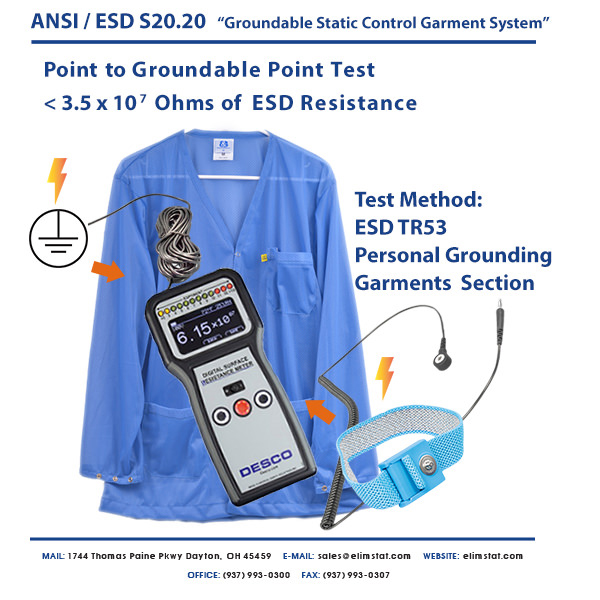
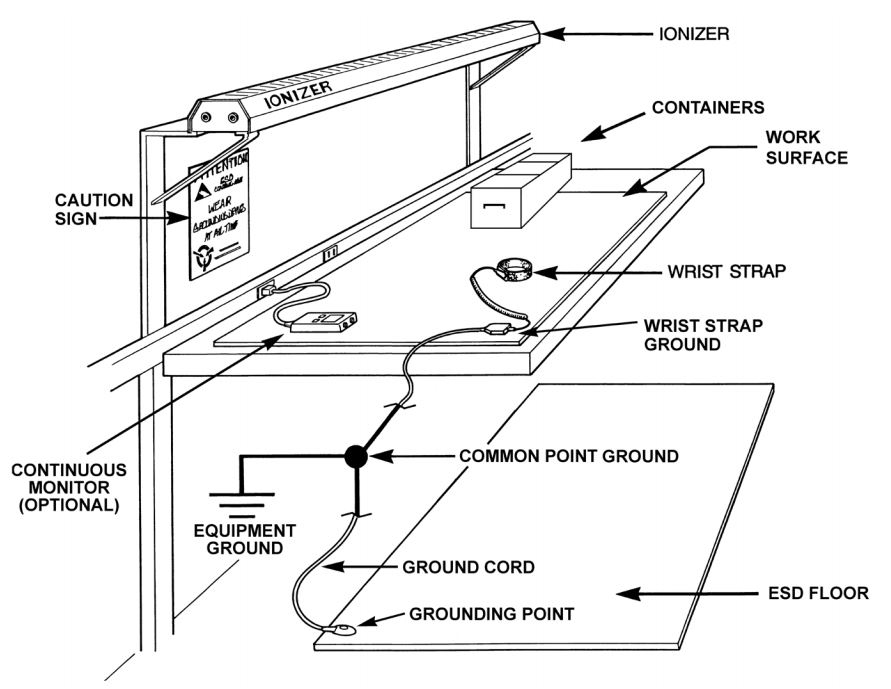
ESD garments are most effective when used as part of a complete ESD system.
Typically combined with:
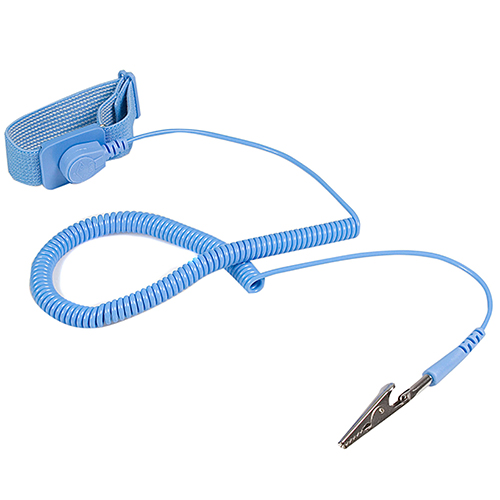
ESD wrist straps
Grounding cords
ESD footwear or flooring
When worn correctly, the garment creates an electrical path that allows static electricity to flow safely from the body to ground.
This system-level integration is a critical part of how ESD garments work in real production environments.
4. Shielding the Clothing Underneath
Another often overlooked function is shielding.
ESD garments are designed to:
Cover personal clothing that generates static
Prevent friction between inner clothing and the environment
Act as a static-controlled barrier around the body
This is especially important in cleanrooms and electronics assembly lines, where uncontrolled static can compromise both product quality and yield.
Do ESD Garments Really Work Without Grounding?
This is a common question—and the answer is nuanced.
Yes, ESD garments still reduce static generation and spread charges evenly.
No, they cannot fully protect sensitive devices without proper grounding.
For maximum effectiveness, ESD garments must be:
Correctly sized
Fully fastened
Used with approved grounding methods
Understanding this distinction is essential when evaluating how ESD garments work in your facility.
Key Factors That Affect ESD Garment Performance
Not all ESD garments perform the same. Effectiveness depends on:
Conductive fiber content and distribution
Fabric surface resistivity
Garment design (coverage, closures, cuffs)
Washing durability and maintenance
Compliance with ESD standards (such as ANSI/ESD or IEC requirements)
High-quality ESD garments are engineered to maintain stable performance even after repeated laundering.
Why Understanding How ESD Garments Work Matters
Choosing ESD garments based on price alone can lead to hidden costs:
Increased product failures
Inconsistent ESD control
Audit and compliance risks
By understanding how ESD garments work, you can:
Select garments that match your risk level
Improve overall ESD program effectiveness
Build long-term reliability into your production process
Conclusion
So, how do ESD garments work?
They work by combining conductive materials, controlled dissipation, shielding, and grounding integration to manage static electricity at its source—the human body.
For industries where precision and reliability matter, ESD garments are not optional apparel. They are a critical engineering control, designed to protect products, processes, and reputations.
If you are building or upgrading an ESD control program, understanding the science behind ESD garments is the first step toward long-term protection and compliance.