
 siu24@trustat-techwear.com
 +86 1866 2439 831

Understanding the Material Science Behind Reliable ESD Protection
In industries such as semiconductor manufacturing, electronics assembly, cleanrooms, and precision engineering, electrostatic discharge (ESD) is not a minor concern—it is a critical risk factor.
The effectiveness of ESD clothing depends largely on material selection, and two solutions dominate the market today: carbon fiber ESD fabrics and conductive yarn fabrics.
Although both are designed to control static electricity, their working principles, durability, and performance stability differ significantly.
This article provides a technical comparison of carbon fiber ESD and conductive yarn in ESD clothing, helping professionals make informed material decisions based on real performance—not marketing claims.
1. Why Material Choice Matters in ESD Clothing
ESD garments do not eliminate static electricity entirely. Instead, they are engineered to:
Prevent charge accumulation
Dissipate electrostatic charges safely
Maintain surface resistivity within controlled limits
The fiber-level structure of the fabric determines how effectively and consistently these functions are achieved over time.
2. What Is Carbon Fiber ESD Fabric?
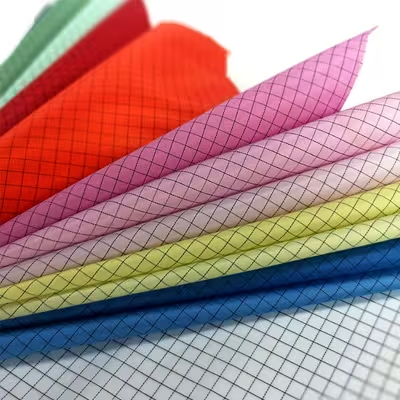
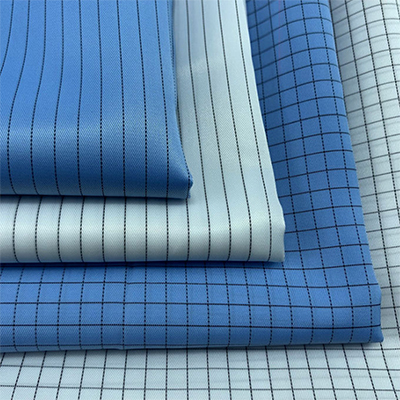
Carbon fiber ESD fabric integrates ultra-fine carbon filaments directly into the base textile (typically polyester or nylon) during weaving.
Structural Characteristics
Extremely fine carbon filaments (often <10 microns)
Uniform grid or stripe distribution
Permanent conductive network embedded in the fabric
How Carbon Fiber ESD Works
Carbon fiber conducts electricity through its intrinsic molecular structure, creating a stable and continuous pathway for static charge dissipation.
Because the conductivity is inherent to the fiber itself, performance does not rely on surface treatments or coatings.
Key Advantages
Stable ESD performance over time
Resistant to washing, abrasion, and aging
Consistent surface resistivity across the garment
Suitable for high-cleanliness environments
This makes carbon fiber ESD a preferred solution in high-risk and high-precision applications.
3. What Is Conductive Yarn in ESD Clothing?
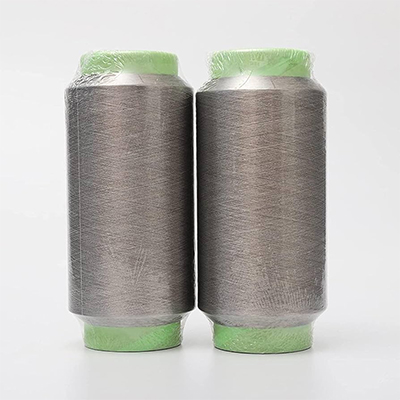
Conductive yarn is a broad category that includes fibers made conductive through external modification rather than intrinsic structure.
Common Types of Conductive Yarn
Silver-coated yarns
Metal-wrapped or metal-blended yarns
Chemically treated conductive fibers
Conductive Mechanism
Conductivity comes primarily from:
Surface metal coatings
Chemical conductive layers
These conductive elements allow static charges to move along the yarn surface—but only as long as the coating remains intact.
Limitations
Conductive layers can degrade after repeated washing
Performance may fluctuate with humidity and wear
Electrical resistance tends to increase over time
4. Carbon Fiber ESD vs Conductive Yarn: Technical Comparison
| Performance Factor | Carbon Fiber ESD | Conductive Yarn |
|---|---|---|
| Conductivity Stability | Excellent | Moderate |
| Wash Durability | Very high | Medium to low |
| Long-term Reliability | Consistent | Gradual degradation |
| Environmental Sensitivity | Low | Higher |
| Service Life | Long-term use | Short to mid-term |
| Typical Applications | Semiconductor, cleanroom | Light electronics, general industry |
From a materials engineering perspective, carbon fiber ESD provides structural conductivity, while conductive yarn relies on surface conductivity, which is inherently less durable.
5. Why High-End ESD Clothing Uses Carbon Fiber
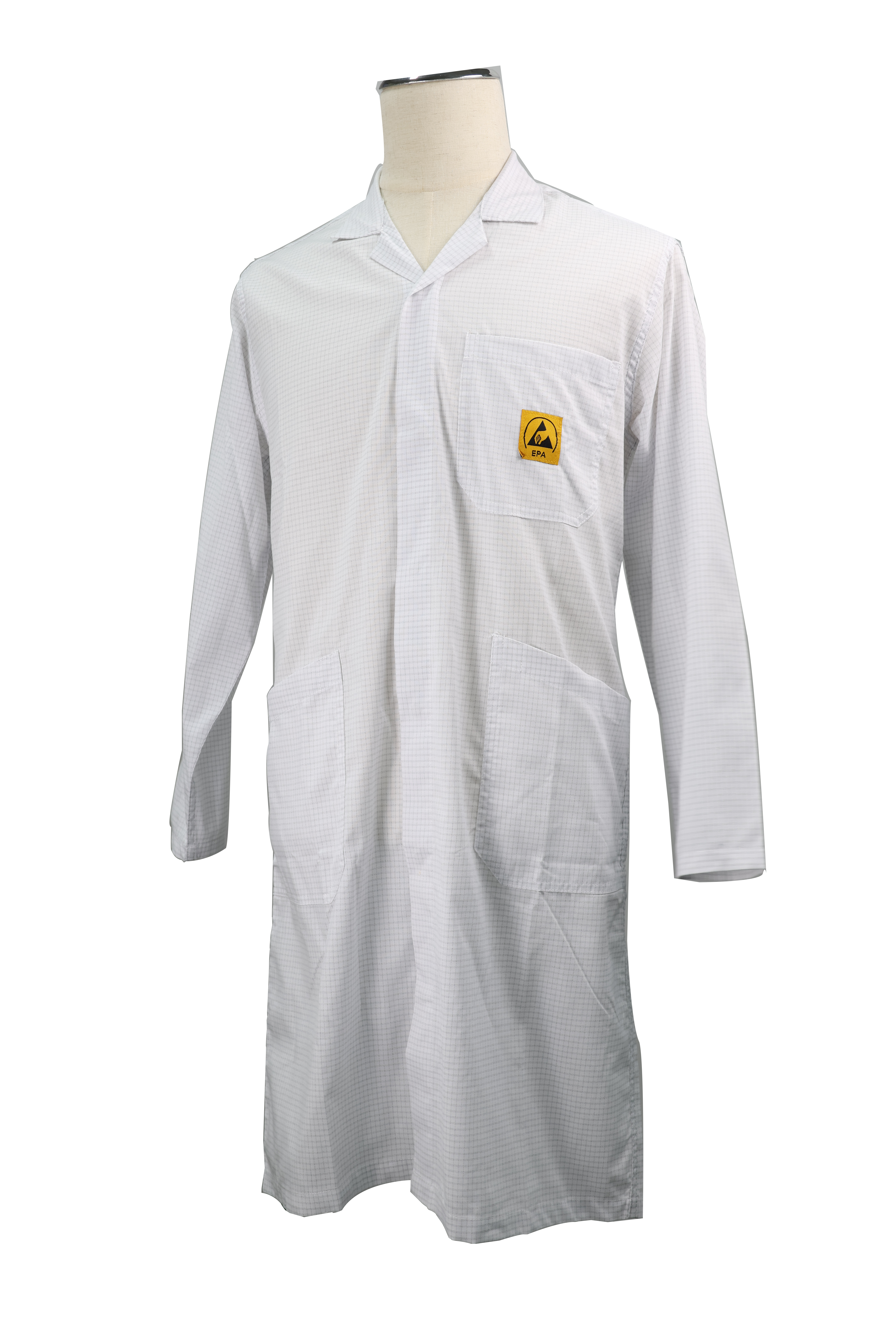
In industries where ESD failure can result in microscopic defects, yield loss, or product recalls, clothing materials must meet strict requirements:
Compliance with IEC 61340 / ANSI ESD S20.20
Stable performance across dozens of wash cycles
Compatibility with cleanroom standards
Carbon fiber ESD fabrics meet these requirements because:
Conductivity is built into the fiber, not applied afterward
Performance remains stable throughout the garment’s lifecycle
Long-term cost is reduced by fewer replacements and failures
For this reason, carbon fiber ESD is widely adopted in advanced ESD clothing systems.
6. Choosing the Right ESD Material for Your Application
There is no universal solution—material selection should be based on risk level and lifecycle expectations.
General Guidance
High-value electronics / cleanrooms → Carbon Fiber ESD
Lower-risk or short-term use → Conductive yarn
When evaluating ESD clothing, decision-makers should consider total cost of ownership, not just initial fabric price.
7. Conclusion: Material Science Defines ESD Performance
ESD protection is not achieved through appearance or labeling—it is achieved through material science.
By embedding conductivity directly into the fabric structure, carbon fiber ESD establishes a higher performance ceiling than surface-based conductive yarn solutions.
For organizations seeking reliable, compliant, and long-lasting ESD clothing, understanding this distinction is essential.