 siu24@trustat-techwear.com
 +86 1866 2439 831

Semiconductor cleanrooms are the heart of the semiconductor manufacturing process. They are controlled environments where even the smallest particle or electrostatic discharge (ESD) can cause irreparable damage to sensitive devices like integrated circuits (ICs) and microchips. As the semiconductor industry demands increasing precision and performance, effective ESD protection becomes more critical than ever.
This article delves into the importance of ESD protection in semiconductor cleanrooms, how it works, and what specific precautions must be taken to ensure both product quality and operational safety in such a high-stakes environment.
The Role of ESD in Semiconductor Manufacturing
Electrostatic discharge is a primary concern in semiconductor manufacturing. Even the smallest charge, much lower than what the human body can feel, can destroy or degrade delicate semiconductor components.
In semiconductor cleanrooms, operators and equipment generate static electricity through movement, handling materials, and interaction with garments and surfaces. If uncontrolled, this can result in:
Damaging microelectronic components during the fabrication or testing process
Reducing the yield of high-precision chips
Leading to costly recalls or rework
The importance of ESD protection in semiconductor manufacturing cannot be overstated. It is an essential element in maintaining both product reliability and cleanroom integrity.
How ESD Protection Works in Semiconductor Cleanrooms
Effective ESD semiconductor protection in cleanrooms involves a combination of material choices, garment design, and strict operational procedures. Here’s a breakdown of how it works:
1. ESD-Safe Garments
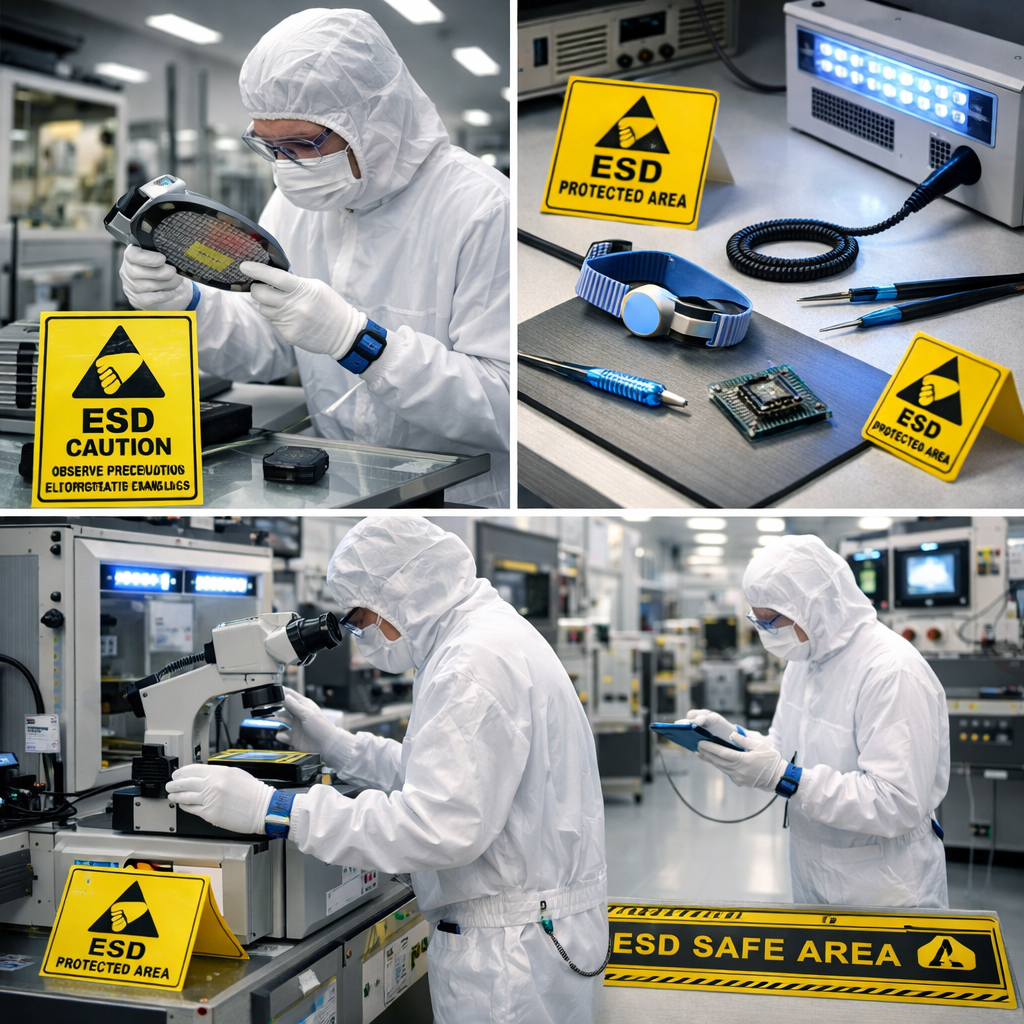
ESD garments are the first line of defense against static buildup. These garments are made of specialized fabrics that incorporate conductive fibers, such as carbon, stainless steel, or other dissipative materials, to ensure static charges are safely dissipated rather than accumulated. The key characteristics of these garments include:
Conductivity: The fibers in the fabric conduct electricity and dissipate the charge. The conductivity should be stable and not fluctuate over time.
Full Coverage: Cleanroom garments, including lab coats, hoods, gloves, and booties, offer full coverage to prevent any potential static generation on exposed areas.
Grounding: ESD garments are typically used in conjunction with grounding systems, such as wrist straps, conductive footwear, and grounded floors, to channel static electricity away from the body and into the ground.
2. ESD-Safe Cleanroom Materials
Aside from garments, the cleanroom environment itself plays a critical role in ESD protection. Materials used for floors, work surfaces, and equipment in the cleanroom should be conductive or dissipative to ensure they do not accumulate static electricity.
ESD flooring: Special flooring materials are used to maintain a constant ground connection. These floors reduce the potential for static buildup and ensure that any charge is transferred directly to the ground.
Conductive surfaces: Workstations and equipment are designed with conductive or dissipative surfaces to avoid static generation during assembly, testing, or packaging processes.
3. Environmental Controls
In addition to ESD-safe garments and surfaces, environmental controls are essential in semiconductor cleanrooms. Proper humidity and air ionization systems help further minimize the risk of static charge accumulation. By maintaining a constant relative humidity (RH) and using ionizing air systems, cleanrooms can control static conditions in the air and on the surfaces of devices, ensuring that no static charge interferes with the sensitive components.
Why ESD Protection Is Vital for Semiconductor Cleanrooms
In semiconductor manufacturing, the tiniest electrostatic event can cause catastrophic failures. Here’s why ESD protection is critical:
Microchip Sensitivity: Modern semiconductors and integrated circuits are incredibly small and have thin dielectric layers that are easily damaged by even the smallest electrostatic charge.
Minimized Defects: Proper ESD protection ensures that there are fewer defects, which directly translates to higher yield rates in semiconductor production.
Compliance: Regulatory bodies and customers often require that semiconductor products meet stringent quality and reliability standards. Having a certified ESD protection program in place is essential for compliance with ISO and IEC standards.
Key Elements of ESD Protection in Semiconductor Cleanrooms
When it comes to ESD semiconductor protection, several elements must come together to form a comprehensive strategy:
Proper Garments: Wearing the right ESD-safe clothing is non-negotiable. Garments must be made from high-quality conductive materials and ensure proper grounding throughout the cleanroom.
Wrist Straps and Footwear: Every individual entering the cleanroom must wear wrist straps connected to a grounding system. Footwear must also be ESD-safe to maintain grounding while walking on the cleanroom floor.
Regular Maintenance and Testing: ESD garments, floors, and equipment must be regularly maintained and tested to ensure they continue to provide adequate protection. This includes routine testing of grounding systems, garment resistance, and floor conductivity.
Employee Training: Operators must be educated on the importance of ESD protection, how to use ESD garments, and proper behavior in the cleanroom to minimize the risk of electrostatic damage.
Benefits of Effective ESD Protection in Semiconductor Cleanrooms
Implementing a robust ESD protection system in semiconductor cleanrooms offers several advantages:
Higher Yield Rates: Effective ESD protection ensures fewer defects, meaning more chips pass inspection and fewer are scrapped or reworked.
Reduced Costs: By preventing ESD-related damage, semiconductor manufacturers can save money on rework, recalls, and repairs.
Improved Product Reliability: By minimizing electrostatic risks, the reliability of the final product is improved, leading to customer satisfaction and stronger relationships.
Compliance and Quality Assurance: Ensuring adherence to ESD standards boosts a company's reputation and helps meet industry certifications and customer requirements.
Conclusion
ESD protection in semiconductor cleanrooms is not just an industry best practice—it is essential for the success and quality of semiconductor manufacturing. By integrating ESD-safe garments, conductive surfaces, environmental controls, and a strict grounding system, manufacturers can effectively protect their delicate devices from electrostatic damage.
For semiconductor manufacturers, a proactive approach to ESD protection ensures higher yields, lower costs, and reliable, high-quality products. Proper training, regular testing, and a commitment to maintaining cleanroom standards will go a long way toward ensuring long-term success in this highly competitive industry.