 siu24@trustat-techwear.com
 +86 1866 2439 831

Introduction
Electrostatic discharge (ESD) is one of the most critical risks in electronics manufacturing, semiconductor production, and cleanroom environments. To control this risk, international standards such as IEC 61340-5-1 define strict requirements for ESD control systems—including ESD garments.
This article explains the key requirements of IEC 61340-5-1 related to ESD clothing and why compliance is essential for modern manufacturing facilities.
What Is IEC 61340-5-1?
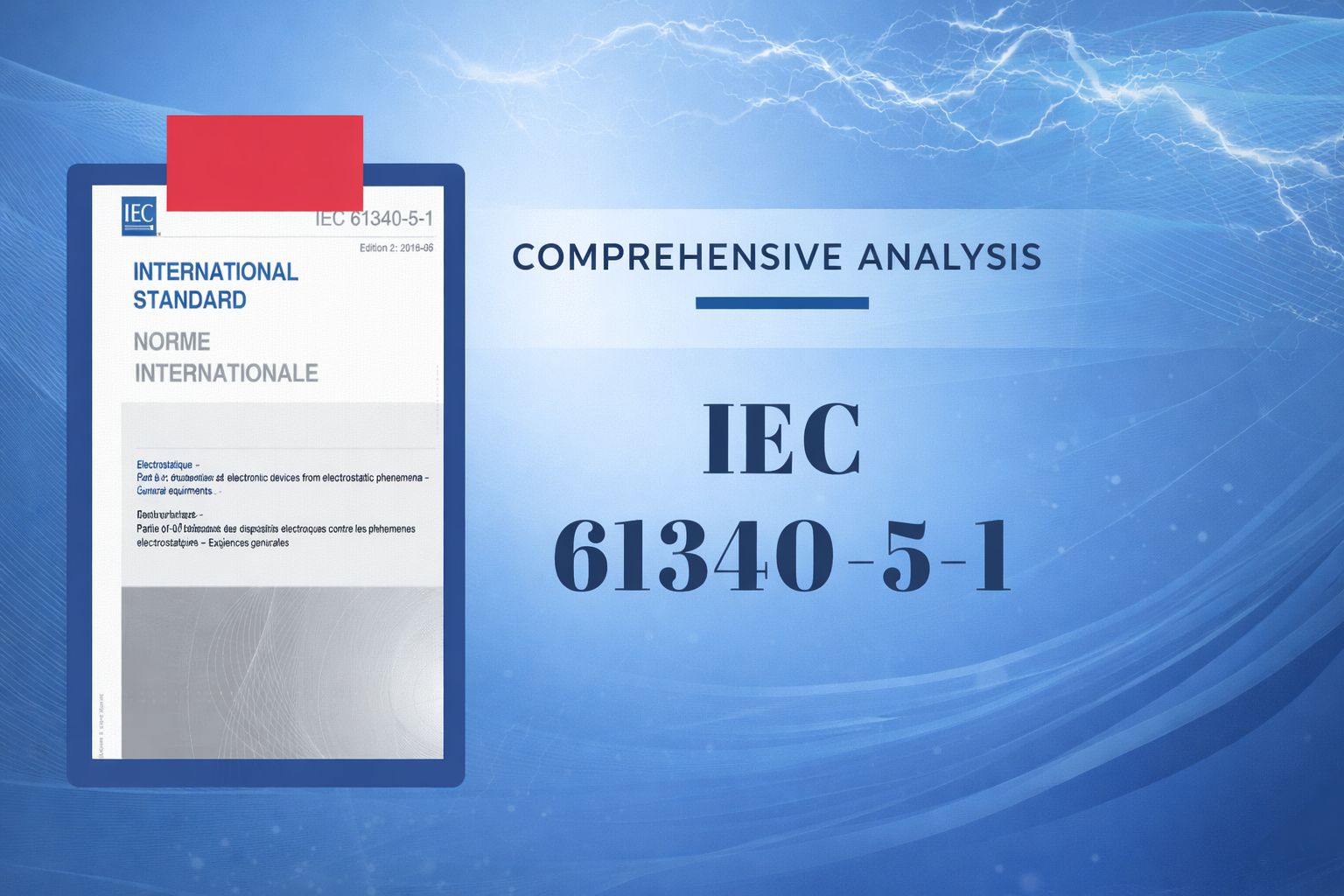
IEC 61340-5-1 is an international standard that specifies the requirements for an ESD control program. Its purpose is to protect electronic components susceptible to electrostatic discharge during handling, assembly, testing, and packaging.
Unlike general workwear standards, IEC 61340-5-1 focuses on system-level ESD control, where garments play an important role.
Why Are ESD Garments Required?
In ESD-protected areas (EPAs), the human body is the primary source of electrostatic charge. Ordinary clothing made from synthetic fibers can generate thousands of volts through friction.
ESD garments are designed to:
-
Minimize charge generation
-
Control charge accumulation
-
Provide a controlled discharge path to ground
Key IEC 61340-5-1 Requirements for ESD Garments
1. Material Conductivity
ESD garments must be made from static-dissipative or conductive fabrics, typically incorporating:
-
Carbon filament yarn
-
Conductive grid or stripe patterns
The fabric must ensure consistent electrical performance throughout its service life.
2. Surface Resistance Control
According to IEC 61340-5-1, garments used in EPAs should typically have:
-
Surface resistance ≤ 1 × 10¹¹ ohms
This ensures charges dissipate in a controlled manner without causing rapid discharge.
3. Garment Coverage
To be effective, ESD garments must:
-
Fully cover personal clothing
-
Include long sleeves
-
Be worn closed during use
Partial coverage significantly reduces ESD protection.
4. Grounding Compatibility
While some ESD garments are worn ungrounded, the standard emphasizes system compatibility, meaning garments must function properly with:
-
Wrist straps
-
Footwear / flooring systems
-
Grounded workstations
5. Durability & Wash Resistance
Garments must maintain ESD performance after repeated industrial laundering. Degradation of conductivity may result in non-compliance.
Common Misunderstandings
-
ESD garments are not insulating clothing – they dissipate charge.
-
Not all “anti-static” clothing meets IEC 61340-5-1.
-
Visual appearance alone cannot determine ESD performance.
Conclusion
IEC 61340-5-1 compliance for ESD garments is not optional in sensitive manufacturing environments. Selecting garments that meet the standard helps ensure product quality, yield protection, and regulatory compliance.
👉 Looking for IEC 61340-5-1 compliant ESD garments? Contact us Email:siu24@trustat-techwear.com to learn more about our solutions.