 siu24@trustat-techwear.com
 +86 1866 2439 831

In industries where electrostatic discharge (ESD) poses a significant risk, such as electronics manufacturing, semiconductor production, and cleanroom environments, the importance of wearing certified ESD garments cannot be overstated. ESD certification ensures that garments meet strict standards for static control, offering reliable protection against electrostatic discharge and ensuring compliance with industry regulations.
This article explains what ESD certification is, why it matters, and how businesses can benefit from using certified ESD garments in their operations.
What Is ESD Certification?
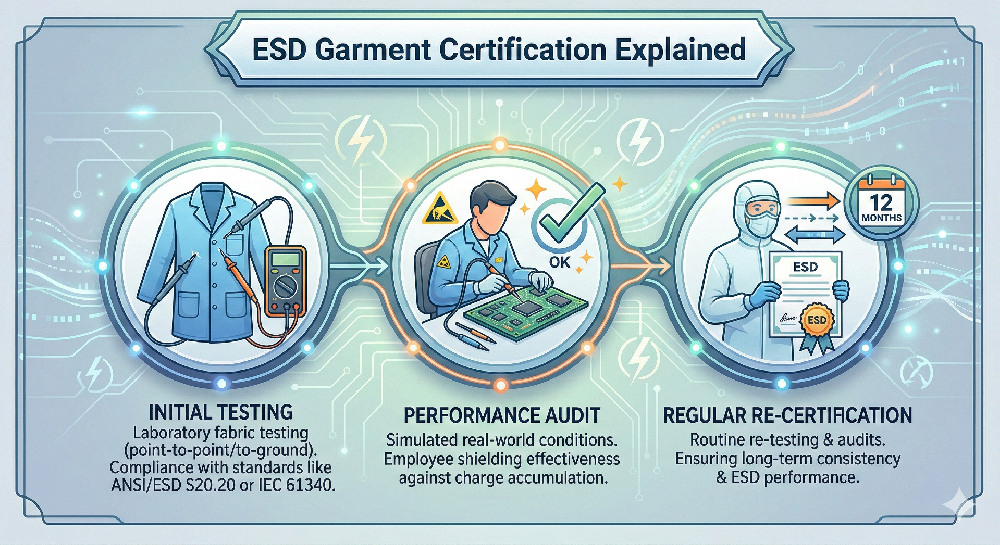
ESD certification refers to the process by which garments are tested and verified to meet specific standards for electrostatic discharge protection. These certifications are issued by recognized standards organizations, and they confirm that ESD garments have been tested and proven to perform effectively in preventing electrostatic buildup and discharge in controlled environments.
The ESD certification process typically includes a series of tests to assess the garment's resistance, dissipative properties, and durability. These tests ensure that the ESD clothing provides the necessary protection to safeguard sensitive electronic components from damage caused by static electricity.
Why Is ESD Certification Important?
ESD certification is critical for several reasons, particularly for businesses in industries where static electricity can damage sensitive components. Below are key reasons why ESD certification is essential:
1. Protection Against Static Damage
The primary purpose of ESD garments is to protect sensitive electronics from electrostatic discharge. Static electricity, even in small amounts, can permanently damage microchips, circuit boards, and other delicate components. ESD certification ensures that the garments have the necessary electrostatic-dissipative properties to keep operators and components safe from static-related risks.
2. Industry Compliance
In regulated industries like electronics manufacturing, semiconductor production, and pharmaceuticals, ESD certification ensures that businesses meet the regulatory requirements for workplace safety. Compliance with standards like IEC 61340-5-1 and ANSI/ESD S20.20 is often required to maintain certifications, pass audits, and avoid penalties. Certified ESD garments help businesses meet these standards and demonstrate their commitment to safety.
3. Consistent Performance
Certified ESD garments undergo rigorous testing to ensure they meet established standards for electrostatic protection. This guarantees that the garments will consistently perform as expected throughout their lifespan. Without certification, businesses risk using garments that may not provide the level of protection needed, increasing the potential for product damage and failures.
4. Building Trust with Customers
For businesses that work with clients in high-stakes industries, having ESD certification for their garments builds trust. Customers and partners can be confident that your company follows industry standards and takes the necessary steps to prevent static-related damage. This can help strengthen relationships, improve client satisfaction, and increase business opportunities.
Key Standards for ESD Certification
There are several widely recognized standards that govern ESD certification for garments. These standards ensure that garments meet specific performance criteria for electrostatic discharge protection. Some of the most important standards include:
1. IEC 61340-5-1
The IEC 61340-5-1 standard, issued by the International Electrotechnical Commission, defines the requirements for ESD protection in the workplace, including the use of ESD garments. This standard specifies how garments should be tested for surface resistivity, body voltage, and other critical factors to ensure they provide adequate protection against electrostatic discharge.
Key elements of the IEC 61340-5-1 standard for ESD garments include:
Surface resistivity: Garments must maintain a resistivity range (typically between 10⁶ and 10⁹ ohms) to ensure they can dissipate static charges.
Body voltage: ESD clothing should prevent dangerous voltage accumulation on the wearer’s body, which could lead to discharge.
Durability: ESD garments must remain effective after multiple washings and wearings.
2. ANSI/ESD S20.20
The ANSI/ESD S20.20 standard is a widely used standard for ESD control programs in the United States. It specifies the requirements for ESD protection in the workplace and includes guidelines for testing and certifying ESD garments.
To comply with ANSI/ESD S20.20, ESD garments must undergo rigorous testing, including surface resistivity testing, body voltage testing, and electrostatic decay time testing. This ensures that the garments will perform as expected in environments where static discharge could cause significant damage to sensitive components.
3. AATCC 76 (American Association of Textile Chemists and Colorists)
AATCC 76 is a test method used to evaluate the electrostatic properties of textiles, including ESD garments. The test assesses the fabric’s ability to dissipate electrostatic charges and determine whether the material can safely reduce the risk of static discharge.
4. ISO 9001 (Quality Management System Certification)
While not specific to ESD garments, ISO 9001 certification is a globally recognized standard for quality management systems. Companies that manufacture ESD garments and hold ISO 9001 certification demonstrate that they adhere to strict quality control processes, ensuring that their products meet high standards of performance and consistency.
How to Ensure Your ESD Garments Are Properly Certified
When purchasing ESD garments, it is important to ensure that they are certified by reputable organizations and meet the required standards for electrostatic protection. Here’s how to ensure that the garments you are purchasing are properly certified:
1. Verify Certification Documents
Ask the manufacturer for the certification documents that confirm the garment meets the necessary ESD standards. These documents should outline the specific tests performed, the results of those tests, and the standards the garment complies with.
2. Check for Official Markings
Certified ESD garments will typically bear the appropriate certification markings or labels, such as the IEC 61340-5-1 or ANSI/ESD S20.20 logo. These markings indicate that the garment has been tested and certified to meet the required standards for ESD protection.
3. Request Test Reports
Reputable manufacturers will be able to provide test reports that confirm the ESD performance of their garments. These reports should include detailed information on surface resistivity, body voltage testing, and other relevant metrics to verify the garment’s effectiveness.
Conclusion
ESD certification is essential for ensuring that ESD garments provide reliable protection against electrostatic discharge, which is crucial for safeguarding sensitive electronic components. Certified ESD garments offer consistent performance, meet regulatory compliance requirements, and help build trust with customers and partners.
By understanding the importance of ESD certification and ensuring that the garments you purchase meet the required standards, you can protect your valuable equipment and ensure the safety of your employees. Make sure to choose ESD garments from certified manufacturers that provide documentation and testing reports to confirm the garments' effectiveness in controlling static electricity.
👉 Contact us to learn more about our ESD fabric options.