 siu24@trustat-techwear.com
 +86 1866 2439 831

In industries where electrostatic discharge (ESD) poses a significant risk to sensitive electronic components, the effectiveness of ESD garments plays a critical role in preventing costly damage. Ensuring the quality and reliability of these garments is paramount, which is where a robust ESD garment quality control (QC) process becomes essential.
This article provides an in-depth look at the ESD garment QC process, explaining the key steps involved, why it matters, and how it helps businesses ensure that their garments meet the stringent standards required for protecting electronic devices and components.
What Is ESD Garment Quality Control (QC)?
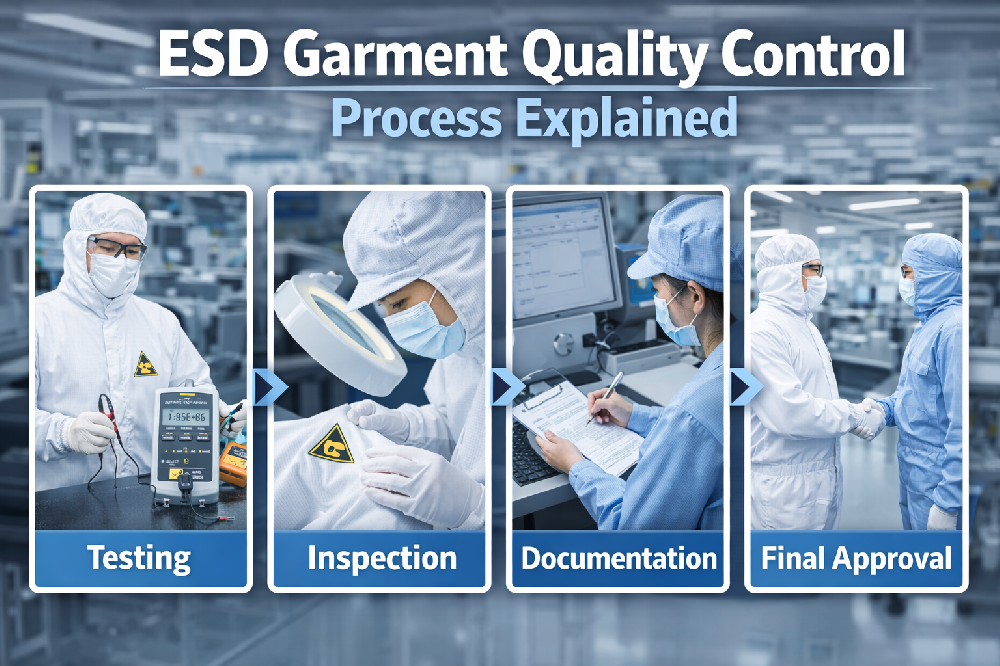
ESD garment QC is a systematic process designed to ensure that each piece of ESD clothing meets the performance standards necessary for effective static discharge control. The process typically involves various stages of inspection, testing, and validation to ensure that the garments provide the necessary protection, durability, and comfort for the end users.
Quality control is essential because ESD garments are often used in controlled environments such as cleanrooms, electronic assembly lines, and semiconductor manufacturing plants—places where even the slightest static charge can cause significant damage to sensitive equipment.
Key Stages of the ESD Garment Quality Control Process
The ESD garment QC process involves several stages to ensure that every garment meets the required performance specifications. Below are the key stages:
1. Raw Material Inspection
The quality control process begins even before the ESD garments are made. It starts with inspecting the raw materials used in garment production, such as:
Conductive fibers (carbon, stainless steel, etc.)
Fabrics used for the garment
Thread and stitching materials
Each material must be tested for its static-dissipative properties, durability, and ability to meet the standards of ESD garment production. The raw materials should also be inspected for any potential defects that could affect the garment's overall functionality.
2. Design and Manufacturing Quality Checks
Once the raw materials pass inspection, the next phase involves manufacturing the garments. At this stage, several QC checks are performed:
Fabric Weaving and Stitching: Ensure that the conductive fibers are woven properly to ensure uniformity in the garment’s ability to dissipate static charges. Additionally, stitching should be checked to ensure that no conductive fibers are damaged or compromised during the manufacturing process.
Garment Construction: All ESD garments must be designed with functionality and fit in mind. Seams, cuffs, closures, and other design elements are carefully inspected to ensure they prevent static leakage and offer a secure fit for wearers.
Electrostatic Performance Check: The garments are tested for their surface resistivity to ensure they are in the correct range (typically between 10⁶ and 10⁹ ohms) to effectively dissipate static electricity.
3. In-Process Inspections
During production, in-process inspections are carried out at various stages. These inspections focus on ensuring the garments meet the necessary quality standards as they are being made. Some of the most important aspects to check include:
Electrostatic Dissipation Capability: Random samples from each batch are taken to check that the ESD garments provide the appropriate charge dissipation characteristics.
Fit and Comfort: Ensuring that the garments provide the right level of comfort for extended wear without compromising the garment’s functionality. This involves checking for a good fit, proper closure mechanisms, and breathable fabrics that prevent overheating or discomfort during long shifts.
Visual Inspection: A visual inspection is conducted to look for defects in stitching, fabric inconsistencies, or any other issues that may affect garment performance.
4. Final Testing of ESD Performance
Once the garments have been manufactured and assembled, the final testing phase ensures that they meet the required ESD performance standards. This phase typically includes:
Surface Resistivity Testing: Using an ohmmeter or resistance tester, the surface resistivity of the finished garment is measured to verify that it falls within the acceptable range for ESD protection.
Body Voltage Testing: This test ensures that no dangerous static charge is accumulated on the wearer’s body when they are wearing the garment. This is critical for preventing any potential damage to sensitive electronic components.
Electrostatic Decay Time: Testing how quickly the garment dissipates static charges is essential to ensure that any accumulated charge will not linger and cause damage.
5. Durability and Wash Testing
Since ESD garments are frequently used in controlled environments, they must endure multiple washing cycles without losing their effectiveness. To ensure this, durability and wash tests are conducted:
Wash and Durability Testing: The garments are washed under standard conditions to simulate real-world use. After washing, the garments are re-tested for their ESD performance to ensure that they still meet the required standards.
Wear and Tear Resistance: The garments are checked for signs of wear and tear, particularly in high-stress areas such as the seams, cuffs, and closures. This ensures that they will provide long-term protection during their lifecycle.
6. Final Inspection and Packaging
The final step in the ESD garment QC process is the final inspection and packaging phase. This involves:
Final Visual Inspection: The garments are checked one last time for any visible defects or inconsistencies that may have been missed during earlier inspections.
Packaging: The garments are carefully folded, bagged, and tagged, with clear labels showing their specifications, care instructions, and ESD certification details.
At this point, the ESD garments are ready for distribution, having passed all necessary tests and inspections to ensure they meet the required standards for ESD protection.
Why ESD Garment Quality Control Is Crucial for Your Business
Implementing a robust ESD garment QC process offers several benefits for businesses:
Ensures Consistent Protection: A rigorous QC process ensures that all ESD garments maintain the same high standards of electrostatic protection, helping prevent damage to sensitive electronics.
Builds Trust: By consistently delivering high-quality garments, manufacturers can build trust with their clients, particularly in industries where quality control and compliance are essential.
Reduces Defects and Returns: Regular quality control checks minimize defects, reducing the risk of returns, dissatisfaction, or the costs associated with product failures.
Compliance Assurance: QC testing ensures that garments comply with international ESD standards, reducing the risk of regulatory issues and ensuring that the garments meet customer expectations.
Conclusion
An effective ESD garment QC process is critical for ensuring that ESD clothing provides the necessary protection to employees working in environments sensitive to static electricity. By implementing a thorough QC process—from raw material inspection to final packaging—businesses can ensure that their ESD garments meet the highest standards of performance, durability, and comfort.
For manufacturers and companies relying on ESD garments in sensitive environments, robust quality control not only safeguards against static damage but also helps enhance trust and confidence in their products, ultimately leading to higher customer satisfaction and improved business outcomes.
👉 Contact us to learn more about our ESD fabric options.