 siu24@trustat-techwear.com
 +86 1866 2439 831

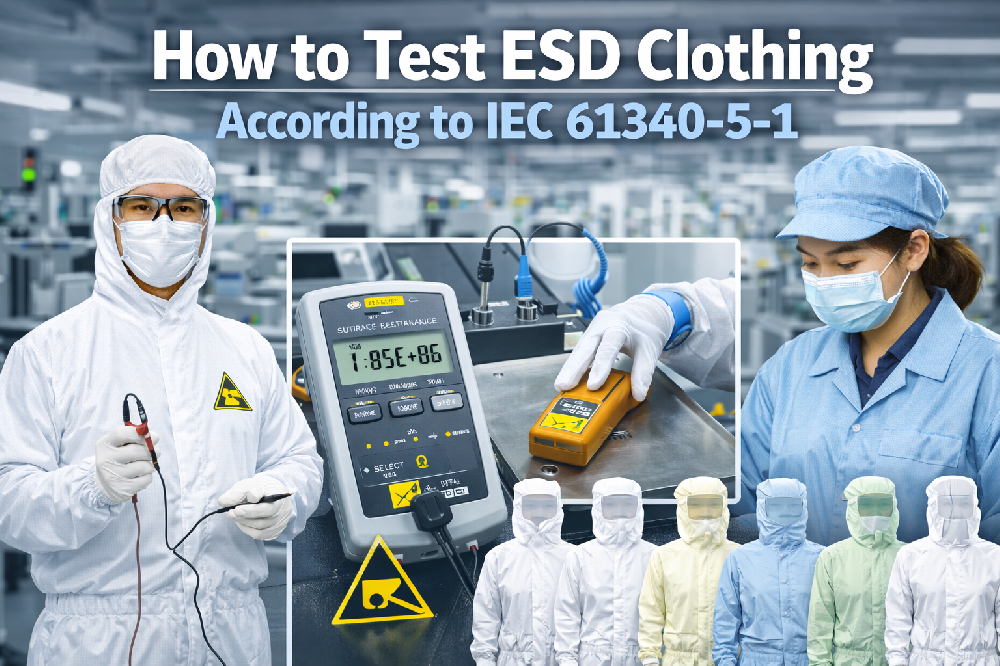
Electrostatic discharge (ESD) is one of the leading causes of damage to sensitive electronic components, and ensuring the effectiveness of ESD clothing is crucial for any industry dealing with sensitive devices. However, it’s not just about buying the right gear—it’s also about verifying that it works. ESD clothing tests, such as those outlined in the IEC 61340-5-1 standard, are essential for confirming that garments perform as expected in protecting against static electricity.
This article explains how to properly test ESD clothing in accordance with IEC 61340-5-1, the global standard for electrostatic protection in the workplace, and why compliance with this standard is vital for manufacturers and facilities handling electronic devices.
What is IEC 61340-5-1?
The IEC 61340-5-1 standard, issued by the International Electrotechnical Commission (IEC), provides guidelines for the protection of electronic devices from the damaging effects of static electricity. It specifically addresses ESD control in the workplace and establishes the requirements for protective clothing used in environments where electrostatic discharges could cause harm to sensitive components.
This standard outlines the testing methods and performance characteristics for ESD clothing to ensure that it meets the minimum requirements for electrostatic protection. Following IEC 61340-5-1 ensures that your ESD clothing offers reliable protection and complies with global safety standards.
Why Test ESD Clothing?
Testing ESD clothing is essential for several reasons:
Ensure Protection: Even the best-quality ESD clothing can lose its effectiveness over time. Regular testing helps ensure that the garment continues to provide reliable protection against static discharge.
Compliance: Many industries, particularly electronics manufacturing, require that workers wear certified ESD clothing that meets IEC standards. Testing is necessary to ensure compliance with industry regulations and to avoid costly fines or recalls.
Prevent Contamination: Improper or ineffective ESD clothing can contribute to contamination risks, especially in cleanroom or controlled environments. Regular testing ensures garments function properly in these environments, preventing particle contamination or electrostatic damage.
Maintain Consistency: Regular testing ensures the quality and performance of ESD clothing across all shifts and operations, leading to consistent performance and improved product quality.
Steps for Testing ESD Clothing According to IEC 61340-5-1
The IEC 61340-5-1 standard outlines several methods for testing ESD clothing to ensure that it meets the necessary specifications. These tests generally fall into the following categories:
1. Surface Resistivity Test
The surface resistivity of ESD clothing is one of the key factors in determining how effective the garment is at dissipating static charges. IEC 61340-5-1 requires that the garment maintain a specific range of surface resistivity to ensure that it can safely control static charges.
How to Perform:
Equipment: Use an ohmmeter or a resistance tester to measure the resistance between the surface of the fabric and the ground.
Procedure: The garment should be laid flat, and the resistance between two electrodes should be measured in different areas of the fabric.
Standard Requirement: ESD garments should typically fall within a surface resistivity range of 10⁶ to 10⁹ ohms. This ensures the garment can both dissipate charges and prevent the accumulation of static electricity.
2. Body Voltage Test
A body voltage test measures the potential buildup of static electricity on the garment when worn by an operator. It is designed to ensure that the ESD clothing will allow the safe discharge of static charges without allowing dangerous levels of voltage to accumulate on the body.
How to Perform:
Equipment: Use a volt meter or an electrostatic voltmeter to measure the voltage on the surface of the garment.
Procedure: The operator should wear the ESD clothing, and static charges should be introduced through controlled movement or contact with objects. The voltage should be measured to ensure it remains below a safe threshold.
Standard Requirement: According to IEC 61340-5-1, ESD clothing should prevent any potentially dangerous body voltage accumulation that could lead to a discharge event.
3. Washing and Durability Test
Since ESD clothing is often used in environments with high hygiene standards, it is essential that the clothing maintains its effectiveness after repeated washings. IEC 61340-5-1 specifies that ESD garments must retain their electrostatic protective properties after several wash cycles.
How to Perform:
Equipment: Test the garment before and after washing with a standard washing machine.
Procedure: Follow the manufacturer’s washing instructions, then test the garment’s surface resistivity and body voltage after washing. Compare the results with the pre-washed garment to ensure performance has been maintained.
Standard Requirement: ESD garments should not experience significant performance degradation after a reasonable number of wash cycles (typically 50 or more).
4. Electrostatic Decay Time Test
The electrostatic decay time test measures how quickly a garment dissipates any accumulated charge. This is important to ensure that any static electricity generated by the operator’s movements or environmental factors is safely neutralized.
How to Perform:
Equipment: Use an electrostatic field meter or voltage meter to measure the time it takes for the garment to dissipate a charged electrostatic field.
Procedure: A charge is applied to the garment, and the time it takes for the voltage to drop below a specific level is measured.
Standard Requirement: The garment should allow for the safe and rapid dissipation of static electricity, ensuring that it does not allow any dangerous buildup of charge.
Ensuring Quality and Compliance with ESD Clothing Testing
To ensure that your ESD clothing continues to meet the requirements of IEC 61340-5-1, consider the following best practices:
Regular Testing: Conduct regular tests on your ESD clothing to monitor its effectiveness over time. Testing should be performed before and after each use, especially in high-frequency use environments.
Certified Equipment: Use certified testing equipment that meets IEC standards to ensure accurate and reliable test results.
Employee Training: Train employees on the importance of wearing properly tested and certified ESD clothing, and ensure that all personnel know how to properly care for their garments to maintain performance.
Conclusion
Properly testing ESD clothing according to IEC 61340-5-1 is essential for ensuring the safety of electronic components and maintaining regulatory compliance in industries where electrostatic discharge is a significant risk. By following these testing methods, manufacturers and facilities can confirm that their ESD clothing meets global safety standards, providing operators and equipment with the necessary protection against static-related damage.
For industries involved in electronics manufacturing, cleanroom environments, or any other area where ESD is a concern, regular testing of ESD clothing should be an integral part of their quality assurance and compliance efforts.