 siu24@trustat-techwear.com
 +86 1866 2439 831

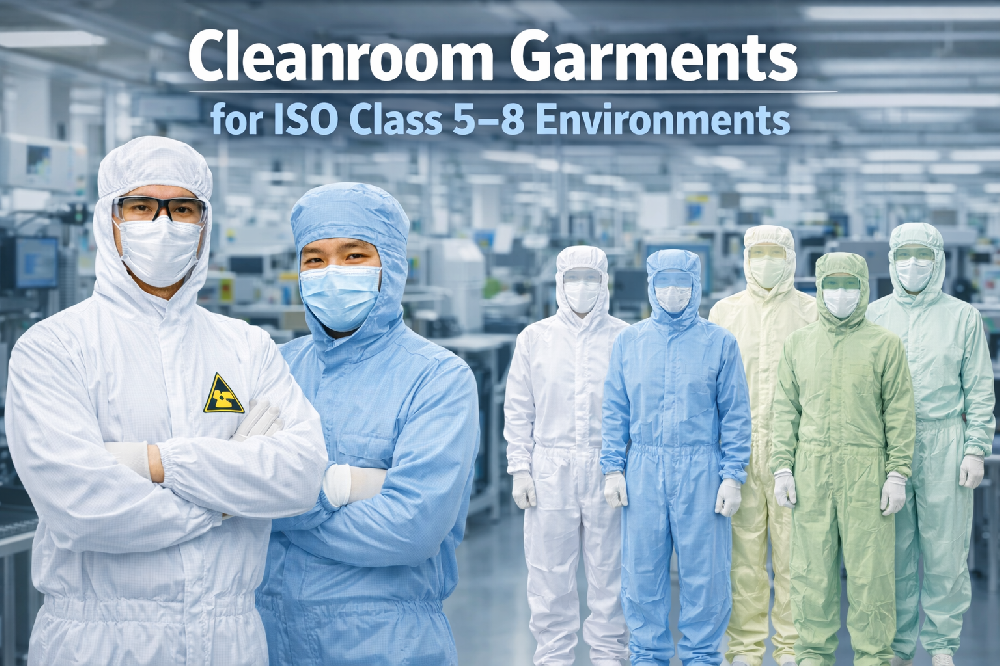
In industries where cleanliness and precision are paramount, such as pharmaceuticals, biotechnology, electronics manufacturing, and semiconductor production, cleanroom garments are an essential part of maintaining controlled environments. Particularly in ISO Class 5–8 environments, where the tolerance for particulate contamination is extremely low, choosing the right garments is critical to both product quality and operational compliance.
This article explores the importance of cleanroom garments for ISO Class 5–8 environments, how these garments contribute to maintaining the integrity of cleanroom operations, and what key factors should be considered when selecting appropriate cleanroom apparel for these high-standard environments.
Understanding ISO Class 5–8 Environments
Before diving into the specifics of cleanroom garments ISO, it's important to understand the significance of ISO Class 5–8 environments. The ISO 14644-1 standard defines cleanroom classifications based on the concentration of airborne particles. The lower the class number, the more stringent the requirements for cleanliness.
Key Features of ISO Class 5–8 Environments:
ISO Class 5: These environments allow a maximum of 3,520 particles (≥0.5 μm) per cubic meter. Common in semiconductor manufacturing, pharmaceuticals, and medical device assembly, they require ultra-cleanliness, typically maintained with advanced HVAC systems and strict protocols.
ISO Class 6-8: These environments allow slightly higher particle counts but still demand careful control over particulate contamination. These are often found in industries like electronics assembly, automotive manufacturing, and food production, where precision is necessary but the strictness of Class 5 may not be required.
In such controlled environments, even the smallest particle can cause serious contamination or product defects. Cleanroom garments play a vital role in minimizing particulate emissions from personnel, preventing contamination, and ensuring the safety and reliability of the manufacturing process.
How Cleanroom Garments Protect in ISO Class 5–8 Environments
Cleanroom garments are specially designed to meet the stringent requirements of various cleanroom environments, especially those with the precise standards of ISO Class 5–8. Here's how they work:
1. Particle Containment
Cleanroom garments are made from materials that are tightly woven or non-woven to limit particle release. The key function is to contain particles that may be shed from the operator's body, such as skin cells, hair, and fibers from clothing. The garments’ structure ensures minimal contamination and prevents particulate matter from entering the environment.
2. Preventing Contamination from Operators
Human operators are a significant source of contamination. Even minute skin flakes or hair can compromise cleanroom conditions. Cleanroom garments for ISO environments are designed to:
Fully cover the operator's body, including hoods, gloves, shoe covers, and booties, preventing direct contact between the body and the cleanroom environment.
Include features such as elastic cuffs and sealed zippers to ensure a tight, secure fit that prevents particles from escaping.
3. Fluid and Chemical Protection
In environments like pharmaceuticals or biotechnology, cleanroom garments may need to provide additional protection against hazardous fluids and chemicals. For ISO Class 5–8 environments where precision is key, garments made from chemical-resistant or fluid-resistant materials can help prevent contamination from spills or exposure to dangerous substances.
Key Features of Cleanroom Garments for ISO Class 5–8 Environments
When selecting cleanroom garments ISO, several factors must be considered to ensure compliance with ISO standards and the needs of specific industries. Below are the key features to look for:
1. Material Composition
The materials used in cleanroom garments are carefully chosen for their ability to minimize particulate generation. Polypropylene, polyester, nylon, and SMS fabrics (Spunbond-Meltblown-Spunbond) are commonly used in cleanroom apparel due to their low particulate shedding characteristics.
2. Design and Fit
The design of cleanroom garments plays a significant role in ensuring that no particles can escape. Garments typically feature:
Hoods with full coverage to protect hair and skin.
Elasticized cuffs, waistbands, and necklines to prevent contamination from entering at the garment’s openings.
Sealed or zipper closures to maintain a secure and contamination-free fit.
3. Compliance with Cleanroom Standards
Garments for ISO Class 5–8 environments must meet stringent cleanroom standards:
Particle shedding rates: Garments should undergo rigorous testing to confirm that they shed minimal particles.
Low electrostatic properties: Certain cleanroom garments may also be designed to minimize electrostatic discharge, especially in sensitive industries such as electronics manufacturing.
4. Comfort and Durability
For personnel working in ISO Class 5–8 environments, comfort is essential. Cleanroom garments should be lightweight and breathable while still providing the necessary protection. Durability is also a critical factor—garments must withstand multiple cleanroom washes while maintaining their protective properties.
Industries That Benefit from Cleanroom Garments for ISO Class 5–8 Environments
1. Semiconductor Manufacturing
In semiconductor manufacturing, even the smallest contamination can destroy microchips or reduce their performance. Cleanroom garments ISO play a crucial role in ensuring that operators do not introduce contaminants that could compromise chip quality.
2. Pharmaceutical and Biotechnology
In the pharmaceutical and biotech industries, maintaining a sterile environment is critical for both product efficacy and regulatory compliance. Cleanroom garments prevent contamination during the production of drugs, vaccines, and medical devices.
3. Electronics Manufacturing
For electronics manufacturers, especially those working with sensitive components like integrated circuits (ICs), controlling particulate contamination is vital. Cleanroom garments protect against particle emissions from operators and ensure high-quality product assembly and testing.
4. Medical Device Assembly
Medical devices are subject to strict standards for cleanliness and sterility. Cleanroom garments in ISO Class 5–8 environments help prevent contamination during the manufacturing, assembly, and packaging of medical devices.
Conclusion
In ISO Class 5–8 environments, where particle control is critical for product quality and compliance, the right cleanroom garments are essential for maintaining a contamination-free environment. By selecting garments that meet the highest industry standards for particle control, fit, material composition, and durability, manufacturers can safeguard the integrity of their cleanroom operations and meet regulatory requirements.
Ensuring that operators wear the correct cleanroom garments for ISO environments not only protects the product but also contributes to operational efficiency, safety, and long-term success in industries such as semiconductor manufacturing, pharmaceuticals, biotechnology, and electronics.
👉 Looking for cleanroom-ready ESD garments? Contact us for professional recommendations.